Egg Yolk for Mayonnaise Manufacturing
Mayonnaise is an emulsion held together by egg yolk — and your emulsion is only as consistent as the yolk behind it. Formats, functionality and procurement for commercial producers.
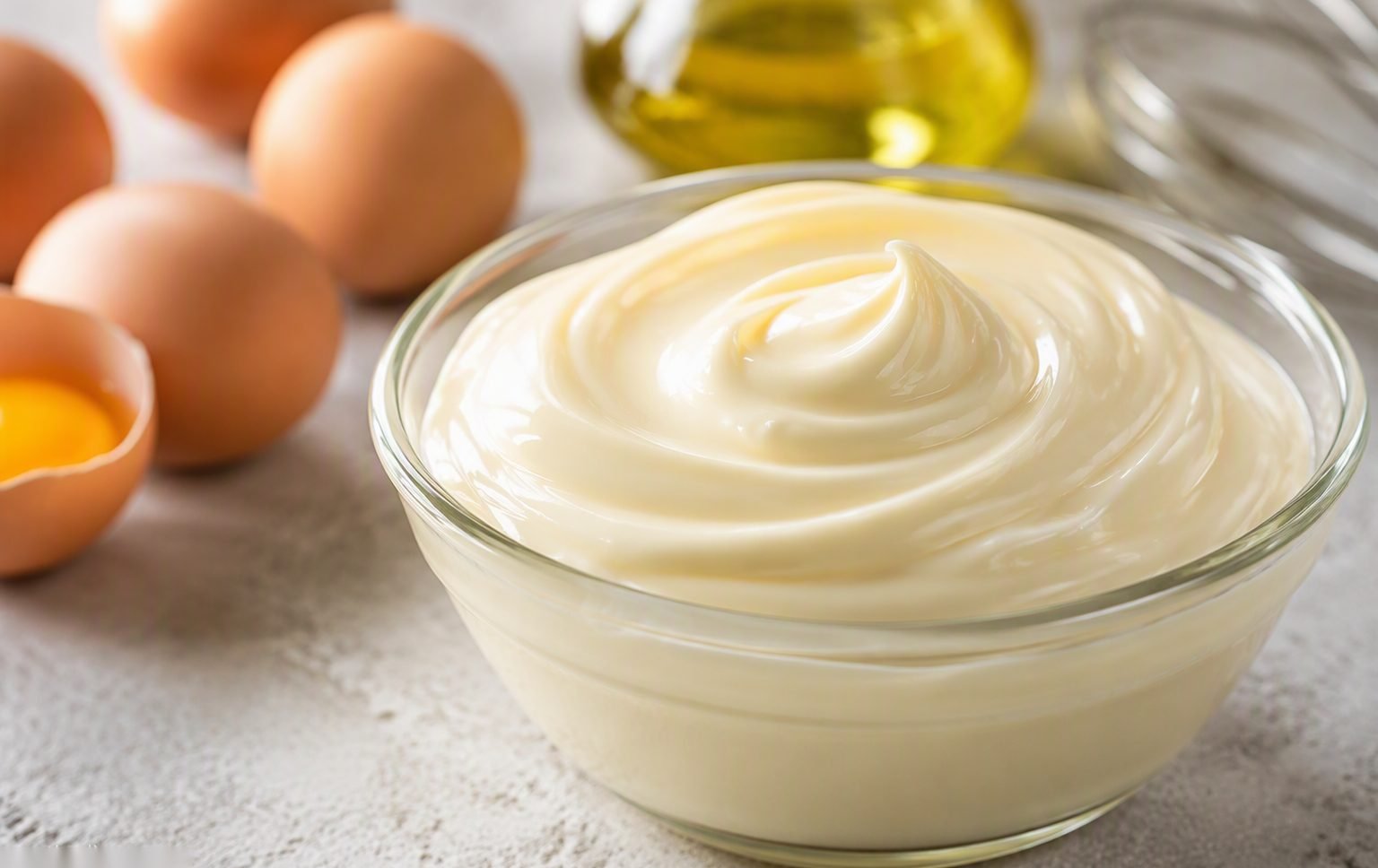
The mayonnaise industry's ingredient reality
Commercial mayonnaise is a remarkable piece of food engineering: a product that can be three-quarters oil yet pours like a cream, holds for months on shelf, and tastes like something a cook could have made. The ingredient that makes the trick work is egg yolk — the emulsifier the category was invented around, and still the benchmark against which every alternative is measured.
For producers, the yolk decision carries unusual weight. Emulsion failure is the catastrophic defect of mayonnaise manufacturing — a broken batch cannot be reworked into spec — so emulsifier consistency ranks above almost every other purchasing criterion. At the same time, the market is moving: clean-label pressure favours recognisable emulsifiers over synthetic ones, cost pressure pushes dosage optimisation, and supply-chain geography pushes many plants toward powder formats. This guide covers how commercial producers use egg yolk in both powder and liquid form, and what to verify when sourcing it.
From Industry Requirement to RFQ
1 · Industry requirement
Typical need: stable emulsification for mayonnaise and dressings. Define your process conditions, volumes and destination before selecting an ingredient.
2 · Relevant egg ingredients
Potentially relevant ingredients for evaluation: Egg Yolk Powder, Liquid Egg Yolk, Whole Egg Powder. Final selection depends on formulation, process and customer requirements.
3 · Technical information
Review the buyer specification summary and the specification guide; product specifications are provided per product on request.
4 · RFQ
Share your requirement, destination and documentation needs through the RFQ form — or request a sample first.
Emulsification: what yolk actually does in mayonnaise
Oil and water separate because the interface between them is energetically expensive. An emulsifier reduces that cost by sitting at the interface — one end in the oil, one in the water. Egg yolk arrives pre-equipped for exactly this job: lecithin and lipoproteins are surface-active molecules that coat oil droplets as homogenisation creates them, building a protective film that stops droplets from merging back together. The smaller and more stable the droplets, the thicker, smoother and longer-lasting the emulsion. The mechanism is covered function-by-function in egg powder functional properties.
Yolk contributes beyond physics. Its lipids carry the rich flavour and creamy mouthfeel mayonnaise is sold on; its carotenoids provide the warm tint; and on the label, "egg yolk" is an ingredient consumers understand — a commercial asset as brands face pressure to remove E-number emulsifiers. Synthetic or modified-starch systems can stabilise an emulsion, but they do not replicate yolk's full package of stability, flavour and declaration.
Direct-answer: why do mayonnaise producers consider yolk powder?
Because it converts the most critical ingredient in the plant into a standardised dry input: identical emulsifying strength batch after batch, no refrigerated liquid handling, no shelf-life race, and dry-cargo freight that makes sourcing independent of geography. The trade — a dispersion step in the aqueous phase — is one most lines absorb easily.
Sahya Agro products for mayonnaise production
Egg Yolk Powder
Concentrated lecithin and lipoproteins in shelf-stable powder form — the standard choice for mayonnaise and dressing plants, especially at distance from supply.
View product → AlternativeLiquid Egg Yolk
Pasteurised liquid yolk that meters directly into the aqueous phase — for high-volume plants within cold-chain range. Availability [PRODUCT AVAILABILITY TO BE CONFIRMED].
View product → SpecialistWhole Egg Powder
For recipes wanting a rounder whole-egg profile at moderate emulsion demand — some dressings, sandwich spreads and sauce bases.
View product →Application breakdown
Commercial mayonnaise
In continuous mayonnaise production, yolk enters the aqueous phase — water, vinegar, salt, seasonings — before oil addition begins. Fully hydrating yolk powder at this stage means the emulsifier is dispersed and waiting when homogenisation starts creating droplets. Process order matters: add oil gradually, maintain shear, and let the emulsifier do its work at the droplet interface. Plants converting from liquid yolk should re-validate dosage, because emulsifying strength per gram differs between formats — pilot trials with functional data from the supplier shorten that learning curve considerably.
Mayonnaise-type dressings and sandwich spreads
Salad dressings, sandwich spreads and flavoured mayo variants run the same emulsion physics at different oil levels and flavour loads. Some of these systems use whole egg rather than pure yolk for a rounder profile; the deciding factor is how much emulsion strength the oil phase demands. See our sauces industry guide for the broader emulsified-sauce category.
Reduced-fat and reformulated systems
Low-fat mayonnaise replaces oil volume with water and bulking agents, which changes the stabilisation problem entirely — starches and gums join the system, and yolk's role shifts toward flavour and partial emulsification. These reformulations are development projects, not ingredient swaps; validate any yolk change inside the full recipe architecture.
Foodservice and institutional formats
Bulk mayonnaise for foodservice follows retail-style production at larger pack sizes, with the same emulsifier requirements. Dry-mix dressing systems for institutional use are a separate, powder-only world — every ingredient must arrive shelf-stable, making yolk powder the only viable egg format.
Functional considerations for mayonnaise technologists
- Emulsifying strength per gram — the purchasing metric that matters; request functional test data, not just composition, and benchmark candidates in your own emulsion.
- Hydration before shear — yolk powder must be fully dispersed in the aqueous phase before homogenisation; dry cores trapped in the oil phase never emulsify.
- Fat freshness — yolk's flavour value travels with its lipids; oxidation control through drying, packaging and storage protects the finished product's taste over shelf life.
- Consistency across batches — emulsion processes are tuned, not improvised; yolk that varies forces constant recipe micro-adjustment.
- Acid and salt environment — yolk performs in mayonnaise's acidic, salted aqueous phase; confirm performance at your formulation's pH during trials.
- Temperature discipline — process temperature affects both emulsification and the emulsion's subsequent stability; standardise it as part of any format conversion.
Avoid absolute claims: no emulsifier guarantees emulsion stability on its own — final stability depends on oil level, homogenisation energy, formulation and packaging. What a supplier can and should guarantee is documented, consistent emulsifying performance from batch to batch.
Powder vs liquid yolk in mayonnaise production
Liquid yolk meters straight into the aqueous phase — no dispersion step, immediate availability — and suits high-throughput plants with chilled storage located within practical delivery range of production. Its costs: refrigeration, short shelf life, and shipping a product that is roughly half water. Yolk powder inverts the trade: a dispersion step in exchange for ambient storage, long shelf life and freight freedom, with composition standardised at the dryer rather than varying with the shell-egg supply. Distance usually decides: plants near production can choose on convenience; everyone else chooses powder. Many producers also hold powder as the contingency format even where liquid is the daily driver.
Procurement guide for mayonnaise producers
- Functional data first — emulsifying performance in writing; composition specs alone do not predict emulsion behaviour.
- COA per batch — matched against the specification, with micro parameters relevant to an acidified emulsion category.
- Oxidation policy — ask how fat freshness is protected through drying, packaging and shelf life.
- MOQ and lead time — [ACTUAL MOQ]; align order cycles with production planning and safety-stock policy.
- Packaging — [PACKAGING TO BE CONFIRMED]; oxygen-protective formats matter more for yolk than for most dry ingredients.
- Documentation — batch identity, traceability, allergen declaration (contains egg), export papers for international supply.
- Pilot trials — validate dosage, dispersion and process order before volume; our team supports emulsion trials.
Quality & food safety: what to evaluate
Mayonnaise's acidity provides a hostile environment for pathogens, but that is a product-level hurdle, not a substitute for ingredient-level control. Verify pasteurisation validation for the liquid yolk before drying, Salmonella standards on the specification, hygienic drying and packing, and the supplier's batch documentation speed. For a product whose headline defect is emulsion failure, also assess how seriously the supplier treats functional testing.
Our approach is described on the quality page. Certifications remain [CERTIFICATION TO BE CONFIRMED] until verified documents are published.
Oxygen-protective
[PACKAGING TO BE CONFIRMED] — yolk's fat content makes oxygen and moisture barriers a flavour issue, not just a safety one.
Cool, dry, sealed
Ambient dry storage with FIFO rotation; reseal opened packs promptly to protect flavour and performance.
Dry cargo
No refrigerated freight for powder; pallet and container configurations confirmed per order — [TO BE CONFIRMED].
Export considerations for mayonnaise producers
Yolk powder is how mayonnaise plants far from egg production secure consistent emulsifier supply: dry cargo, long shelf life, batch COA and shipping documentation included. Destination-specific requirements should be raised at enquiry stage. Verified destination list: [ACTUAL EXPORT MARKETS]. See our global supply page.
Mayonnaise producer questions
Mayonnaise is a high-oil emulsion, and egg yolk is its classic emulsifier: yolk lecithin and lipoproteins surround microscopic oil droplets and keep them suspended in the water phase. Yolk also contributes the flavour, colour and creamy mouthfeel consumers expect, with an ingredient declaration they recognise.
Yes — yolk powder is widely used in commercial mayonnaise. It is dispersed in the aqueous phase before oil addition and homogenisation. Producers typically validate dosage and process order in pilot trials when converting from liquid yolk, since emulsion strength per gram differs between formats.
Yolk powder delivers concentrated lecithin and lipoproteins — maximum emulsifying strength per gram — which is what high-oil emulsions need. Whole egg powder dilutes that with albumen and suits recipes wanting a rounder, whole-egg profile at lower emulsion demands. Most dedicated mayonnaise lines choose yolk.
Formulations vary widely by brand, market and price point — there is no single standard level. What matters for buyers is emulsifying strength delivered per unit cost, which is why suppliers should provide functional data and support dosage trials rather than quote a universal number.
Commercially produced yolk powder is made from pasteurised liquid yolk, and mayonnaise's acidic, salted environment further inhibits microbial growth. Buyers should still verify pasteurisation validation and microbiological standards on the specification and COA.
Emulsifying performance data, fat and solids consistency, oxidation control (which protects flavour), microbiological standards, COA per batch, packaging integrity, and a pilot trial in your own emulsion system before volume commitment.
A well-made emulsion is physically stable for the product's intended shelf life, and yolk quality — particularly fat freshness — supports flavour stability over time. Overall shelf life depends on the complete formulation, process and packaging, not the emulsifier alone.
Reduced-oil systems reformulate the entire stabiliser system, often adding starches or gums alongside egg. Yolk still contributes emulsification and flavour, but the recipe architecture changes — validate in development trials rather than assuming a direct swap.
[ACTUAL MOQ] — MOQ depends on packaging and destination and is confirmed per enquiry. Samples are available so your team can run emulsion trials before any commercial order.
Yes — yolk powder ships as dry cargo with batch COA and export documentation, making it practical for mayonnaise plants far from egg production. Our verified export market list is to be confirmed; enquiries are welcome.
Producing mayonnaise or dressings?
Share your oil level, volumes and destination — we respond with functional data, samples and pricing.