Using Egg Ingredients in Confectionery
Foams that set into sweets — how albumen works in nougat, marshmallow and meringue-type confections, and what whip quality depends on.
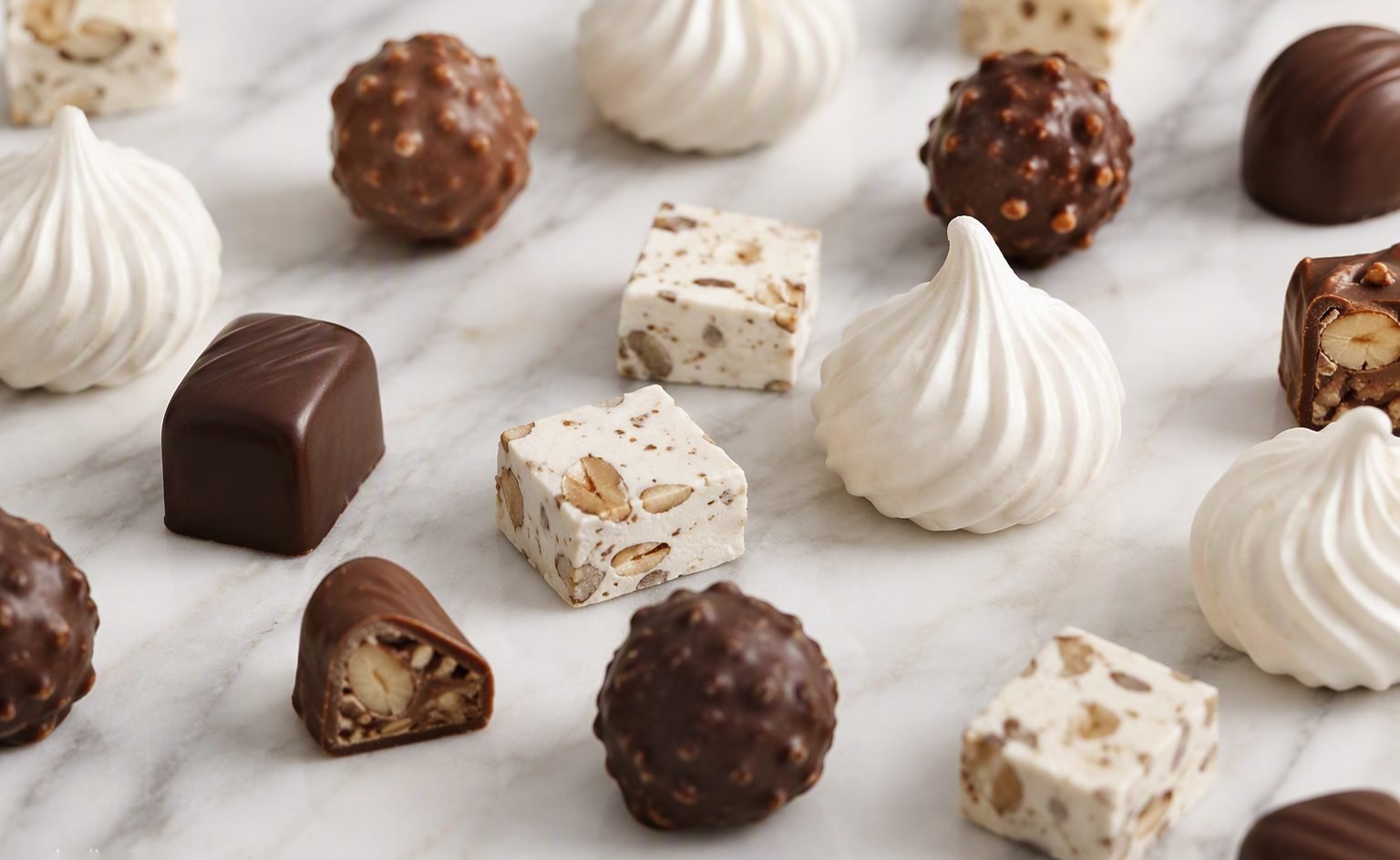
The application: egg-containing confectionery
Confectionery is mostly an egg-free category — hard candies, chocolates, gummies and toffees typically contain no egg at all. But a distinct family of sweets is built on egg protein functionality: nougat, marshmallow, divinity and similar aerated confections, meringue-type products, and certain fondant and cream systems. In these products, whipped egg protein isn't an ingredient among many — it's the structure of the sweet itself. This guide covers that family specifically, without pretending egg belongs everywhere in the candy aisle.
For the buyer-side view of the category, see the confectionery industry page; for dessert foams with a different texture target, the desserts guide.
Where egg ingredients fit in confectionery formulation
Aerated confectionery works by trapping air in a sugar matrix, and egg white protein is one of the classic whipping agents that make it possible. In nougat, whipped albumen (or a similar aerating protein) is combined with hot sugar syrup; the protein film stabilises the foam while the syrup sets around it, producing the characteristic chewy-aerated texture. In marshmallow, albumen whips with syrup into a stable, light foam that sets by gelation — often alongside gelatin, with the proteins sharing the structural work. In meringue-type products and divinity-style sweets, the egg foam essentially is the confection.
Yolk plays a smaller, specialist role: enriching certain cream centres, fondant-style products and traditional recipes where its colour and flavour are wanted. But the category's egg story is overwhelmingly an albumen story — whipping performance is what confectioners buy.
Direct-answer: what does egg white do in confectionery?
It builds and stabilises the foam: whipped albumen proteins form films around air bubbles that survive the addition of hot sugar syrup and hold the aerated structure as the sweet sets. That foam is the texture of nougat, marshmallow and meringue-type confections.
Which Egg Ingredient May Fit?
Potentially relevant ingredients for evaluation include Egg White Powder, Whole Egg Powder, Egg Yolk Powder and Liquid Egg White. Final ingredient selection depends on formulation, process and customer requirements.
Egg products for confectionery production
Egg White Powder
High-whip albumen for nougat, marshmallow and meringue-type products — the structural protein of aerated confectionery.
View product → SpecialistEgg Yolk Powder
Enrichment for cream centres and traditional recipes where yolk colour and flavour are part of the product design.
View product → AlternativeLiquid Egg White
Pasteurised, chilled — for confectioners with liquid handling and high throughput. [PRODUCT AVAILABILITY TO BE CONFIRMED]
View product →Functional considerations in aerated confectionery
- Whipping performance — foam volume, speed and stability are the product-critical properties; albumen is purchased on whipping, not just protein content.
- Hot-syrup survival — the foam must tolerate hot sugar syrup addition without collapsing; protein film strength and whipping protocol both contribute.
- Foam density control — aeration level sets the sweet's texture from dense-chewy to light-soft; whip time and solids interact here.
- Sugar-system interaction — syrup composition (sucrose, glucose, invert levels) shapes how the foam sets and the sweet's final texture and shelf behaviour.
- Flavour neutrality — albumen's mild flavour lets delicate confectionery flavours lead; off-notes in the protein show up in the sweet.
- Water activity and shelf life — aerated sweets are moisture-sensitive systems; the protein foam's interaction with the sugar phase shapes texture stability over shelf life.
These are formulation levers, not performance guarantees: the same albumen behaves differently across syrup systems, whipping protocols and setting processes. Trials in your actual recipe are the qualification.
Formulation considerations
Rehydration quality decides whipping quality. Albumen powder must be fully rehydrated and dissolved before whipping — undissolved particles never join the foam and drag down performance. Follow the TDS reconstitution guidance [SPECIFICATION TO BE CONFIRMED], allow adequate hydration time, and strain where your process benefits.
Verify whipping per lot. Confectioners should run a standard whip test on incoming lots — foam density, volume, stability under your standard protocol — before releasing material to production. Properly produced albumen whips reliably, but lot-level verification is what keeps a nougat line predictable.
Format conversion arithmetic. Recipes built on liquid egg white convert via the TDS ratio: albumen powder plus water replaces the liquid white, with total recipe water rebalanced. Sugar-syrup systems are unforgiving of water-balance shifts, so calculate carefully and validate in bench trials before line trials.
Processing considerations
Aerated confectionery processing is timing-critical: whipping protocol (speed, time, temperature), syrup cooking and addition rate, mixing under controlled shear, then depositing, extrusion or slab forming and setting. Albumen format changes touch the front of this chain — hydration and whipping — and everything downstream inherits the foam quality produced there. Monitor foam properties at the whip stage; they predict the finished texture better than any downstream measurement.
Powder vs liquid albumen in confectionery
Powder dominates industrial confectionery for operational reasons: dry-store logistics, long shelf life, exact scaling, and composition consistency that keeps whipping predictable across campaigns. The rehydration step is real work but well understood. Liquid albumen suits high-throughput confectioners with chilled liquid handling — no hydration step, direct use. Fresh shell whites belong to artisan confectionery; industrial scale moved past them for hygiene and consistency reasons.
Whipping quality itself is format-neutral when each format is handled correctly — the foam doesn't know whether its proteins arrived dry or liquid. Choose on operations; qualify on whip tests in your own protocol.
Procurement considerations
- Specification — written parameters including whipping-relevant data; batches released against it.
- COA per batch — composition and micro results for your QC records.
- Whipping verification — agree how whip performance is documented; test lots on arrival with your standard protocol.
- Micro standards — validated pasteurisation; request supporting documentation.
- Packaging — [PACKAGING TO BE CONFIRMED]; sizes matched to batch usage.
- MOQ & shelf life — [ACTUAL MOQ]; shelf life per TDS [SPECIFICATION TO BE CONFIRMED].
- Storage & shipping — dry, cool, sealed; dry-cargo freight — [TO BE CONFIRMED] per order.
Quality & food safety: what to evaluate
Confectioners buy whipping performance and flavour neutrality above all: evaluate suppliers on lot-to-lot whip consistency in your standard test, sensory neutrality, pasteurisation validation and micro discipline. Batch records and traceability complete the assessment.
Our approach is described on the quality page. Certifications remain [CERTIFICATION TO BE CONFIRMED] until verified documents are published.
Confectionery application questions
It builds and stabilises foam: whipped albumen proteins form films around air bubbles that survive hot-syrup addition and hold the aerated structure as the sweet sets — the texture foundation of nougat, marshmallow and meringue-type confections.
No — most confectionery (hard candy, chocolate, gummies, toffees) contains none. Egg belongs to the aerated family: nougat, marshmallow, divinity, meringue-type sweets, and some cream systems. This guide covers that family.
Because whipped albumen stabilises the foam that hot sugar syrup sets around, producing nougat's characteristic chewy-aerated texture. The protein's film strength and the syrup system work together to define the final bite.
Yes — fully rehydrated per the TDS ratio, albumen powder whips into stable foams for marshmallow production, often alongside gelatin. Rehydration quality decides whipping quality: undissolved powder never joins the foam.
With a standard whip protocol: fixed rehydration, whip speed and time, then measure foam density, volume and stability. Run it per incoming lot — lot-level verification is what keeps an aerated-confectionery line predictable.
Properly produced albumen is flavour-neutral, letting delicate confectionery flavours lead. Sensory neutrality is a legitimate supplier-evaluation criterion — test it in your own product, since off-notes in the protein appear in the sweet.
Whipping performance per lot (documented and tested), written specification, COA per batch, validated pasteurisation and micro standards, flavour neutrality, and packaging integrity.
Cool, dry, sealed storage; full rehydration with adequate hydration time before whipping; reconstituted albumen treated as perishable — chilled and used promptly.
[ACTUAL MOQ] — MOQ depends on packaging and delivery location and is confirmed per enquiry. Samples are available for whip tests and trials.
Producing aerated confectionery?
Share your product types, process and volumes — we respond with specs, samples and pricing.